How to Choose an AI Note Taking Device That Actually Makes Life Easier
Daryl Fillion
Or perhaps you tried to take notes during a lecture, client call, interview, or brainstorming session and ended up doing neither job particularly well.
Have you ever left a meeting and realized you remember the conversation but can't remember who agreed to do what?
Or perhaps you tried to take notes during a lecture, client call, interview, or brainstorming session and ended up doing neither job particularly well. You were too busy typing to listen properly, yet still missed important details.
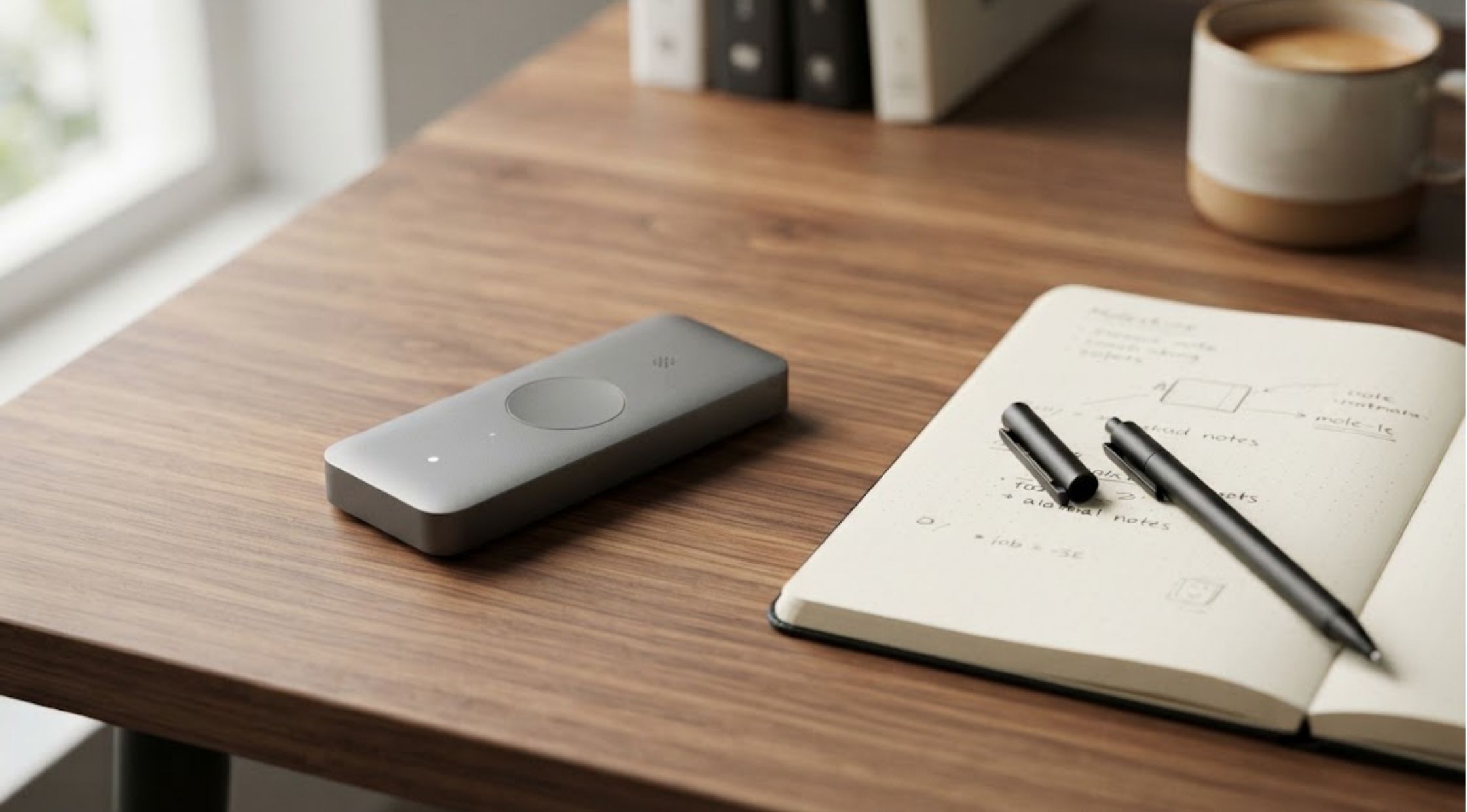
This is one reason an AI Note Taking Device can be so useful. Instead of forcing you to choose between paying attention and documenting everything, the right device can capture the conversation while you stay focused on the people and ideas in front of you.
But not every recording device solves the same problem. Before buying one, it's worth understanding which features actually matter.
Why Traditional Note-Taking Doesn't Always Work
Taking notes sounds simple until the conversation starts moving quickly.
You Can't Listen and Write Everything
When someone is speaking quickly, you have to decide what to write down and what to ignore. That creates an unavoidable problem: you may record your interpretation rather than the exact information that was discussed.
Important details can disappear while you're trying to summarize them in real time.
Your Notes Can Become Disorganized
Even when you manage to keep up, handwritten or typed notes aren't always easy to review later.
A page filled with abbreviations and disconnected points may make sense immediately after a meeting but become difficult to understand a week later.
Phones Create Their Own Distractions
Using your phone as an AI Voice Recorder may seem like the obvious solution. But your phone also brings notifications, calls, messages, and other distractions.
Opening a recording app may only take a few seconds, but those interruptions can make it harder to remain present during an important conversation.
What Should You Look for in an AI Note Taking Device?
The best device isn't necessarily the one with the longest list of features. Look for features that solve problems you actually experience.
1. Simple Recording
Recording should be almost effortless.
If you need to unlock a screen, find an app, select a recording mode, and adjust multiple settings every time, you're less likely to use the device consistently.
A physical button or one-touch recording system can make spontaneous ideas and conversations easier to capture.
2. Good Microphone Performance
A recording is only useful if the audio is clear enough to understand.
Consider where you'll use the device. A quiet office has different requirements from a conference room, classroom, café, or group meeting.
Multiple microphones can be particularly useful when several people are speaking. It's also worth checking whether the device is designed specifically for conversations rather than simply functioning as a basic voice recorder.
3. Transcription and Summaries
Recording hours of audio doesn't solve the note-taking problem if you still have to listen to everything afterward.
This is where AI becomes particularly useful.
A capable AI Note Taking Device can turn recordings into searchable transcripts and structured summaries, helping you review the important information without replaying an entire conversation.
4. Battery and Storage
Think about how frequently you'll use the device.
If you're recording throughout the day, battery life becomes much more important. Storage also matters if you want to record without relying on your phone or an internet connection.
For frequent users, these aren't minor technical specifications. They're part of the everyday experience.
Choose Features Based on Your Routine
Different people need different things from an AI Voice Recorder.
A student might prioritize lecture capture and searchable transcripts. A business professional may care more about meetings, action items, and follow-ups. A journalist or researcher could place greater emphasis on recording quality and organization.
Before buying, ask yourself three questions:
- Where will I use it most?
- How long will my typical recordings be?
- What do I want to do with the recordings afterward?
Your answers can help you avoid paying for features that don't actually improve your workflow.
When a Dedicated AI Voice Recorder Makes Sense
If your phone already records audio, why buy another device?
The answer is convenience.
A dedicated AI Voice Recorder can be designed specifically around capturing conversations rather than making calls, checking email, or displaying notifications.
Heypocket takes this approach by separating the recording hardware from your phone. Its current device starts recording with a physical button, stores recordings locally, and can operate offline before syncing with the app when you reconnect.
Pocket also combines two studio microphones with a contact microphone designed for phone calls. The company lists up to four days of active-use battery life, 64GB of onboard storage, and a recording range of up to 15 metres depending on the environment.
The idea is straightforward: capture first, then let the software help organize what was captured.
How AI Can Turn Recordings Into Useful Information
Recording a conversation is only the first step.
Pocket can process recordings into transcripts, summaries, action items, and mind maps. It also supports transcription in more than 120 languages.
That changes the role of a recorder.
Instead of having a folder full of audio files that you rarely revisit, you can have structured information that is easier to search and use.
For example, after a project meeting, you may want to know:
What decisions were made?
Who needs to follow up?
What deadlines were mentioned?
What were the main discussion points?
Rather than manually scanning pages of notes, an AI-powered system can help organize that information for review.
Don't Overlook Privacy
Whenever you're recording conversations, privacy deserves serious attention.
Before using any recording device in a meeting, classroom, interview, or personal conversation, make sure recording is permitted and that you understand any applicable consent requirements.
It's also worth examining how recordings are stored and protected.
Pocket says its recordings are encrypted at rest and that recording requires a physical button press rather than an always-listening or wake-word system.
These details can be just as important as microphone quality when choosing an AI Note Taking Device.
The Benefits of Upgrading
Stay More Present
Instead of constantly looking down to write, you can focus on the conversation.
Capture More Detail
A recording can preserve information you might otherwise miss while taking manual notes.
Save Review Time
AI-generated summaries and action items can make long conversations easier to process afterward.
Create a Searchable Knowledge Base
When recordings and transcripts are organized properly, old conversations can become easier to revisit when you need specific information.
Make Follow-Up Easier
Turning discussions into clear action items can help reduce the chance that important tasks disappear after the meeting ends.
Choose the Device That Fits the Way You Work
The right AI Note Taking Device isn't necessarily the one with the most impressive specification sheet. It's the one you'll actually use.
Look for simple recording, reliable microphones, useful transcription, practical battery life, sufficient storage, strong organization, and sensible privacy controls.
For people who want something more focused than another phone app, Heypocket offers a dedicated approach to capturing thoughts, calls, meetings, and conversations, then turning those recordings into more useful information.
Ultimately, the purpose of an AI Voice Recorder isn't to create more technology in your life. It's to remove some of the work that gets in the way of listening, thinking, and remembering.
If you regularly leave conversations wishing you'd captured more, choosing the right recording device could be a simple way to make your daily workflow more organized and give your attention back to the moment.
Comment:
Your email address will not be published. Required fields are marked *
Search
Related Posts

Oct 12, 2026
How to Choose the Right At Home Sauna for Your Space and Routine
You're not alone.

Oct 10, 2026
How to Choose the Best Digital Camera for Kids Without Adding More Screen Time
Finding a camera for a child sounds simple until you start looking at the options.

Sep 11, 2026
How to Choose the Right Used Canon Camera
Camera shopping can be an expensive process, particularly if you wish to purchase a camera that does not cost the price of the new camera that you are considering.